Knowing what we know now, and perhaps what specialists knew then, many academics a generation ago were autistic. Or at least they were at Durham, that sometime seat of Jason Arday, who will of course be fine. He has got out of academia at the right moment. In a couple of years’ time, large numbers of his former peers will be scratching a living heaven knew how, but something like the dancing or the jungle will have set him up on popular television. He did not award his own doctorate. If that and his later publications were at once rubbish and plagiarised, then what of the original material? Where are its authors now? Meanwhile, Paul Knaggs writes:
Sir Mark Rowley went on LBC this week and said the quiet part out loud. Asked why the Metropolitan Police spent four months investigating a journalist for the crime of asking questions, the Commissioner told Nick Ferrari: “We dropped the ball on that one, let’s not beat around the bush.” He added, more revealingly, that the complaint should never have got past the front desk in the first place.
It was meant to sound like candour. It reads more like a confession.
The journalist is Jack Grove, a reporter at Times Higher Education. His offence was emailing Professor Jason Arday, a sociology of education professor at Cambridge, with questions about his academic record, after academics tipped him off to apparent similarities between parts of Arday’s PhD thesis and another student’s work. Grove also asked about Arday’s claimed fundraising total and his ultra-distance running feats. Ordinary reporting. The kind of thing journalism exists to do.
Somebody, and it still isn’t clear exactly who, rang the police. Cambridge University has since said flatly that it never made a complaint and wasn’t aware of one being made. Whoever it was, the Met treated a plagiarism inquiry as a potential crime and sat on it for four months. Grove was never interviewed. He learned he’d been under investigation only when officers rang to say the case was closed, and told him not to contact Arday again because the professor’s “mental health” had been affected. Arday’s lawyers, Carter-Ruck, then wrote to Grove’s editors suggesting the paper’s scrutiny of a Black academic “may be” racially motivated, a charge that dissolves the moment you notice the questions were about a PhD thesis, not his skin colour.
Here is the part Rowley’s radio apology conveniently left out. Arday has since admitted the running challenge he publicised took twice as long as claimed, that he didn’t personally raise the sum for charity he was credited with but was one of roughly a hundred people in a syndicate he can’t name due to a non-disclosure agreement, and that he falsely claimed a visiting professorship at Ohio State. On Wednesday, under what he called “unrelenting” scrutiny, he resigned. The Met also passed a harassment complaint about a second academic who was independently looking into Arday’s record to another police force, which had the sense to decline it. This was not one overworked officer making a bad call. It was a pattern, and the pattern only stopped because journalism did its job faster than Scotland Yard could obstruct it.
The Process is the Punishment
Nobody had to charge him with anything. Four months of being under investigation did the work a prosecution never needed to.
This publication has been here before. We covered the surveillance operation Whitehall ran against the press under Starmer’s Home Office, and the way successive governments have used the machinery of the state, quietly, procedurally, without ever needing to pass a headline law, to make journalism a costlier and more frightening trade than it used to be. Grove’s case fits that shape exactly. Nobody had to charge him with anything. Four months of being under investigation, and a phone call telling him to back off, did the work a prosecution never needed to.
It is not an isolated habit, either. In 2013, David Miranda, partner of the Guardian journalist who broke the Snowden files, was held for nine hours at Heathrow under Schedule 7 of the Terrorism Act, a power the Court of Appeal later found incompatible with press freedom protections under human rights law. In 2023, French publisher Ernest Moret was detained at St Pancras and questioned about his views on Emmanuel Macron. The same year, Grayzone journalist Kit Klarenberg was pulled aside at Luton and interrogated for hours. Palestine peace activist Sarah Wilkinson. In August 2024, freelance reporter Richard Medhurst was handcuffed by six officers at Heathrow and held for almost a day, prompting the National Union of Journalists and the International Federation of Journalists to warn of a “chilling effect” on journalism itself.
George Galloway, former MP, was stopped by officers under Schedule 3 of the Counter-Terrorism and Border Security Act after arriving from Moscow via Abu Dhabi. The legislation allows authorities to stop, question, search and detain individuals at borders to determine if they have engaged in alleged “hostile activity”, a conveniently elastic definition that can apparently stretch to cover any political position the government finds inconvenient. None of these people were terrorists. All of them were reporters whose questions someone in power found inconvenient. And Julian Assange spent 1,901 days in Belmarsh before he was finally released in 2024 on a plea deal that forced him, in his own words, to plead guilty to journalism, the first publisher ever convicted under the US Espionage Act.
Reporters Without Borders published its 2026 World Press Freedom Index this year showing the UK’s overall ranking has actually crept up to 18th out of 180. Don’t let that flatter anyone. RSF’s own assessment of Britain names the specific rot: lawsuits aimed at gagging journalists, alongside a global finding that anti-terror and national security law is now the fastest-growing weapon against the press worldwide. That is precisely the mechanism used against Grove, dressed up as a welfare concern instead of a terrorism charge, but built from the same instinct: treat scrutiny of the powerful as a threat to be managed rather than a right to be protected.
So ask the only question that actually matters here. In whose interests does a police force spend four months investigating a reporter it never once speaks to, while the person he was investigating turns out to have been telling the public lies? And to whom, exactly, is that force accountable, when the only consequence for getting it catastrophically wrong is a radio interview and a shrug?
An apology costs Sir Mark Rowley nothing. A police force willing to act as a professor’s private security detail against the press costs the rest of us something we can’t easily get back.
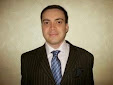
Calling the cops on a reporter who'd emailed him questions.
ReplyDeleteIf it is not that, then it is the Greens doing so on voters who had sent them away with fleas in their ears. A lot of us must be owed eye-watering payouts for that.
Delete